



Immolable NFTs: Staging Artificial Ephemerality for Performative Digital Arts
Orpheus Institute, Ghent
Study day with composer, computer musician, researcher Kosmas Giannoutakis on the use of smart contracts in music composition.
Creative Practices after AI and Blockchain

Artificial Intelligence and blockchain become increasingly intertwined with human creativity, leading to novel forms of expression that decentralise traditional notions of creative agency, authorship, ownership, and the ontology of the artwork. Posthuman Music investigates what happens to music, creativity, and artistic practice when we decenter the human, embrace technological agency, and think in terms of assemblages rather than works.
Combining philosophical perspectives from posthumanism and assemblage theory with artistic research on composition with these technologies, the project bridges the gap between theory and practice. It will generate new musical objects, develop new taxonomies for musical works that reflect human-AI collaboration, explore the creative potential of blockchain through smart contracts, and contribute to the ethical and aesthetic discourse surrounding posthuman creativity.
Posthuman Music is an ERC Advanced Grant led by Paulo de Assis and funded by the European Research Council under the EU Horizon Europe research and innovation programme (Grant Agreement No. 101200558).
Research Strand 01
RS1 investigates what happens to music, creativity, and artistic practice when we decenter the human, embrace technological agency, and think in terms of assemblages rather than works.
Research Strand 02
RS2 studies how AI and blockchain enable new forms of distributed authorship and tactical interventions that challenge intellectual property regimes and human-centered creative agency.
Research Strand 03
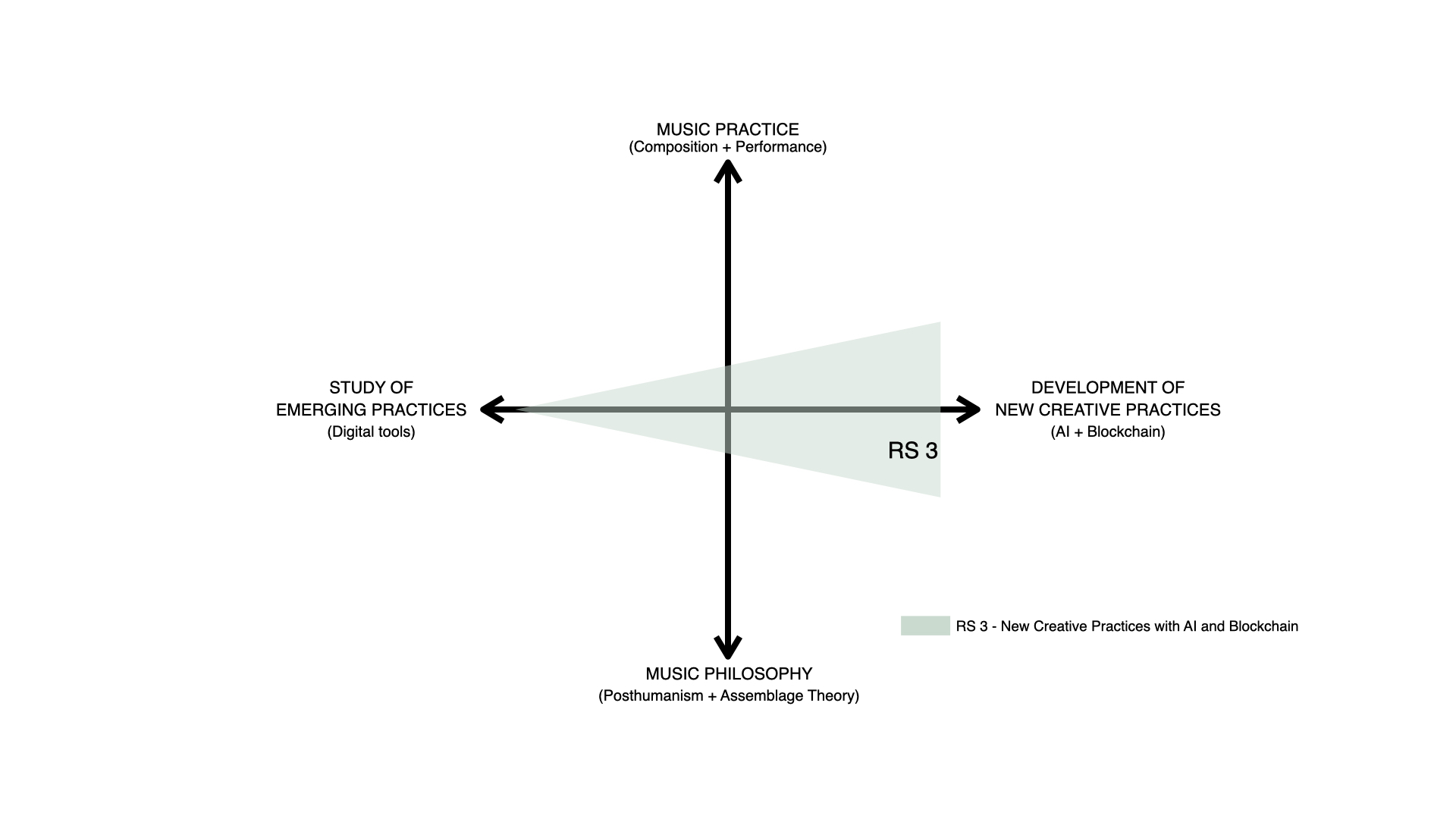
RS3 explores practice-based research on composition with agential AI, the creative use of smart contracts, algorithmic workflows, and particalisation of music.
Research Strand 04
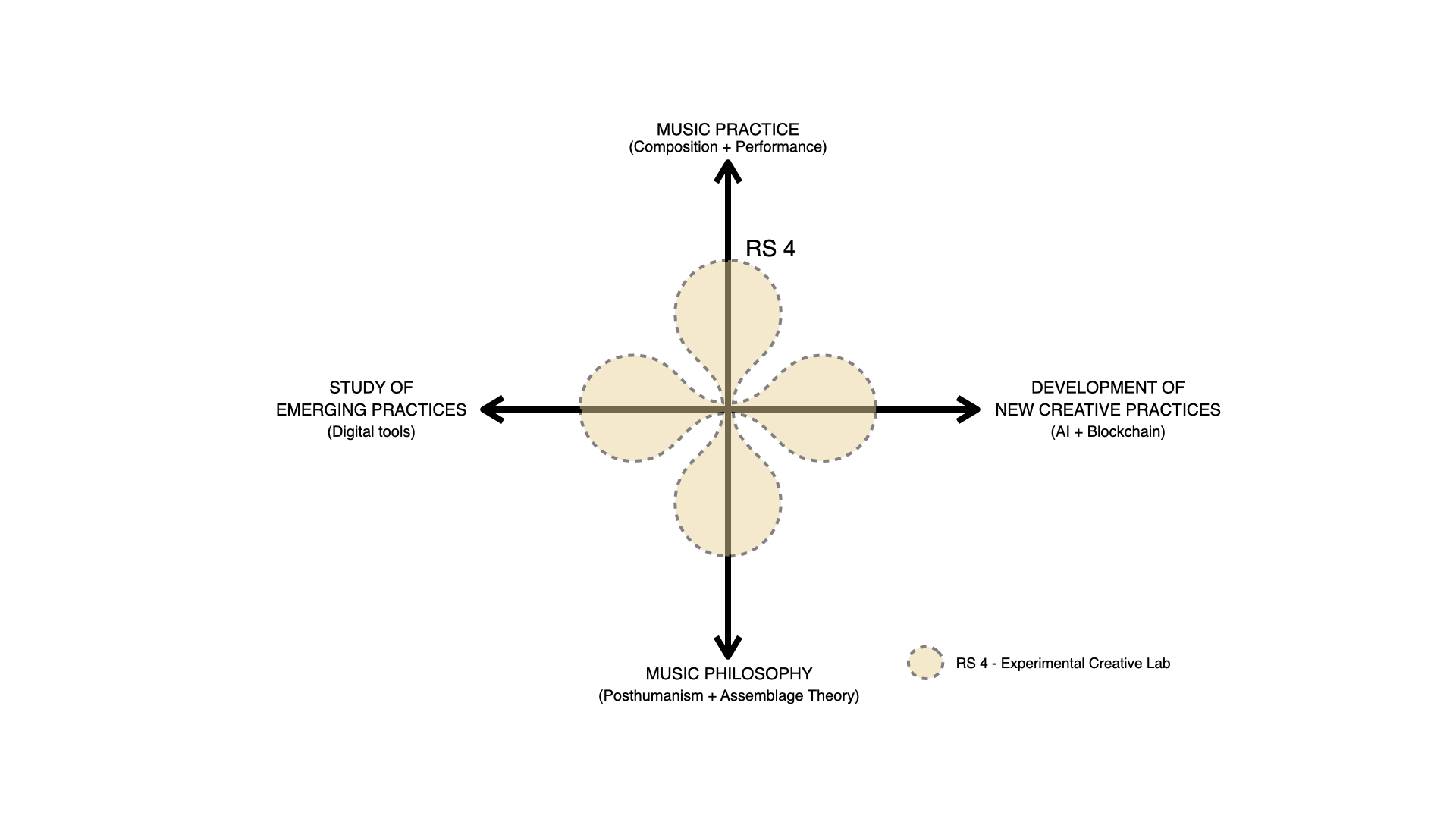
RS4 is a creative and experimental lab that brings together insights and results from the other three research strands, aiming at the generation of new musical entities that can take the form of prototypes, musical works, installations and performances.
The members of the Advisory Board bring expertise in topics that are central and/or adjacent to the Posthuman Music project. As the project develops, they can provide a sounding board for the discussion of key artistic, conceptual, ethical, or legal issues. This can help the project team navigate emerging philosophical, aesthetic, socio-economic, and technical challenges involving music and emerging technologies. The Advisory Board is also invited to participate in selected activities throughout the project duration.
Orpheus Institute, Ghent
Study day with composer, computer musician, researcher Kosmas Giannoutakis on the use of smart contracts in music composition.

Orpheus Institute, Ghent
Study day with music philosopher Lydia Goehr (Columbia University) on music, technology, and AI.

Orpheus Institute, Ghent
First public presentation of the project for the host institution building collective momentum.

Orpheus Institute, Ghent
Investigating capabilities of agential AI for re-working procedural compositional practices into generative systems for music composition.

Orpheus Institute, Ghent
The conference fostered an interdisciplinary dialogue around the transformative role of agential systems in music and sound art, offering a platform to share innovative practices, critical perspectives, and creative insights.
DetailsThe project will critically examine the ethical implications of AI-generated compositions for authorship, creativity, human-artificial agency, and the potential for algorithmic bias or discrimination. The project is committed to staying up to date with developments in these areas, including the European AI Act (2024). Together with the Advisory Board the project will ask: How do we attribute creativity and rights to AI-generated compositions? How might these technologies redefine musical creativity and human artists' roles? What are the implications of blockchain-based music distribution for artist autonomy and fair compensation?
The project will conduct regular ethical audits of its AI and blockchain implementations, ensuring transparency and addressing potential biases. The team will draft ethical guidelines for AI and blockchain use in music creation and distribution, potentially serving as a model for future research and industry applications. By placing ethics at the forefront of its practice-based research, the project aims to advance innovation while contributing to responsible frameworks for future music creation and distribution in a posthuman context.
The project is also acutely aware of the environmental sustainability challenges posed by AI and blockchain technologies. To reduce impact, the blockchain operations will be designed to be energetically efficient, utilizing low-consumption blockchain networks, preferring protocols such as Liquid Proof-of-Stake (LPoS), Pure Proof-of-Stake (PPoS), and Proof-of-Stake (Pos), which are much more energy-efficient and consume significantly less energy (99% less) compared to conventional Proof-of-Work (PoW) systems.